In hydraulic equipment maintenance, high-pressure oil pipes are regularly customized and replaced due to wear. Even a small error can lead to scrapping the entire pipe, so standardized processes are implemented to ensure zero mistakes.
1. Accurate Measurement of Length Specifications
Clearly distinguish between “net length” and “total length with joints” in measurements. For example, a construction machinery customer confused these terms, resulting in a 20 cm shortage of custom tubing and subsequent equipment downtime.
To prevent this, implement a double confirmation process: confirm length definitions in writing with the customer and use a vernier caliper with 0.1 mm accuracy to retest measurements. If needed, request a physical reference from the customer, especially for hydraulic oil pipes.
2. Accurately Verify Working Pressure
The pressure-bearing capacity of tubing is determined by the number of steel wire braids. Specifically, the pressure resistance for each layer is approximately as follows: a single layer of steel wire can withstand about 16 MPa; two layers can handle up to 25 MPa; and four layers can resist high pressures exceeding 40 MPa.
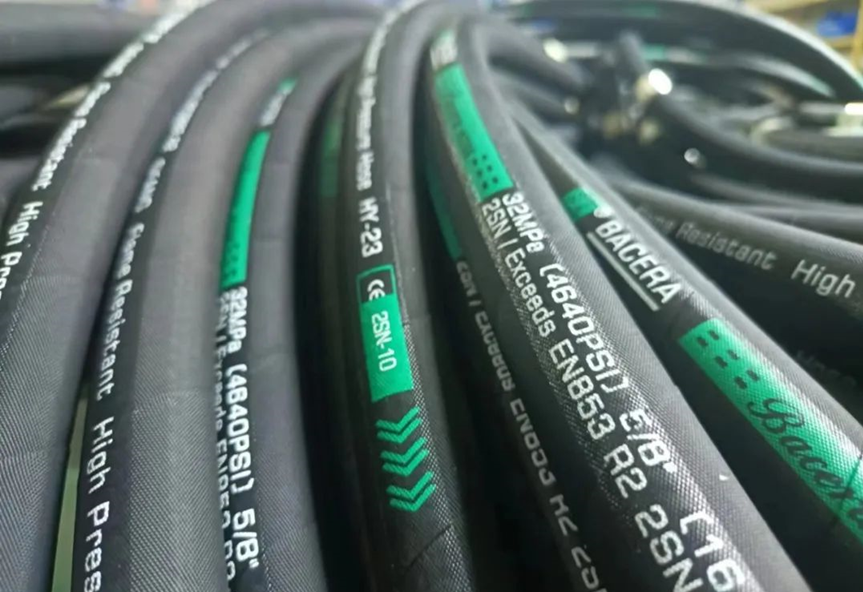
If a customer is unable to provide the pressure parameters, these can be verified by checking the identification code on the existing tubing (for example, SAE 100R2AT-10, where “10” indicates an inner diameter of 10 mm and “R2” signifies two layers of wire). Alternatively, pressure testing equipment can be used for verification.
It is important to note that a safety redundancy of 20% of the pressure should be maintained under various working conditions.
3. To accurately verify the working pressure of the tubing, it’s important to consider its pressure-bearing capacity, which is determined by the number of steel wire braids. A single layer of steel wire can withstand approximately 16 MPa, while two layers can handle up to 25 MPa. Tubing with four layers can endure high pressures exceeding 40 MPa.
If a customer cannot provide the pressure parameters, these can be identified by examining the identification code on the old tubing. For example, in the code SAE 100R2AT-10, “10” indicates an inner diameter of 10 mm, and “R2” signifies two layers of wire. Alternatively, pressure testing equipment can be used to verify the parameters.
Additionally, it’s essential to account for a safety margin of 20% when operating under varying conditions.
For complex customizations, it’s best to use the customer’s original sample as a reference. Comparing the sample’s identification information, dimensions, and interface details allows for simultaneous verification of design and production parameters, creating a quality control process of “sample comparison – data verification – finished product testing.”
Establishing a sample database that links key parameters with physical drawings can also provide a standardized reference for future customizations, minimizing the risk of errors.