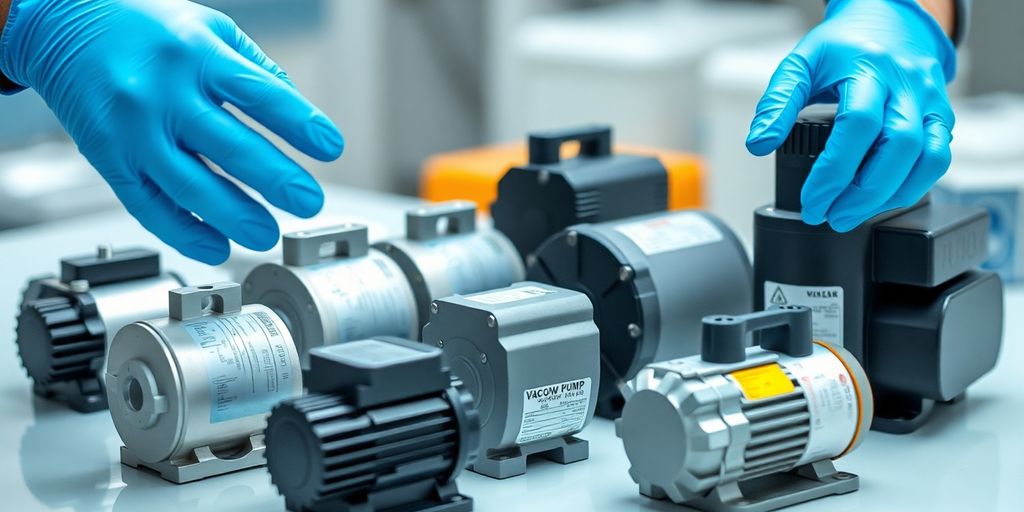
Okay, so you need a vacuum pump. First things first, what are you actually using it for? This is the most important question. Is it for a lab setup, industrial manufacturing, or something else entirely? The required vacuum level, gas type, and process temperature will all heavily influence your choice. For example, a rough vacuum pump might be fine for degassing, but you’ll need something much more sophisticated for mass spectrometry. Think about the specifics of your application before you even start looking at pumps
h3
Considering Performance Specifications
Now that you know what you need the pump for, let’s talk numbers. We’re talking about things like:
- Pumping Speed: How quickly can the pump remove gas from the system? Measured in CFM or liters per minute.
- Ultimate Vacuum: What’s the lowest pressure the pump can achieve? Measured in Torr, mbar, or Pascals.
- Operating Pressure Range: What range of pressures can the pump effectively operate within?
These specs need to align with your application’s requirements. A pump with a high pumping speed but a poor ultimate vacuum might be useless for certain tasks. It’s all about finding the right balance.
h3
Evaluating Pump Technologies
There are a bunch of different vacuum pump technologies out there, and they all have their pros and cons. Here are a few common types: - Rotary Vane Pumps: These are workhorses, good for rough to medium vacuum levels. They’re relatively inexpensive but can be noisy and require regular oil changes.
- Diaphragm Pumps: These are oil-free, making them great for clean applications. They don’t reach as low a vacuum as rotary vane pumps, but they’re quieter and require less maintenance.
- Scroll Pumps: These are another oil-free option, offering better vacuum levels than diaphragm pumps. They’re more expensive but are a good choice for applications where cleanliness is critical.
- Turbomolecular Pumps: These are the kings of high vacuum. They’re expensive and require a backing pump, but they can achieve incredibly low pressures.
“Choosing the right pump technology is a balancing act. You need to consider your budget, the required vacuum level, the gas type, and any other specific requirements of your application. Don’t just grab the cheapest pump you can find; do your research and make an informed decision.”
h2
Optimizing Vacuum Pump Performance
h3
Understanding System Integration
Getting the most out of your vacuum pump isn’t just about the pump itself; it’s about how it plays with the rest of your system. Think of it like a band – a great drummer (the pump) can be amazing, but if they’re not in sync with the bass player (the system), the music suffers. Proper system integration is key to achieving optimal vacuum performance. This means considering things like: - Pipe diameter: Too small, and you’ll choke the pump.
- Seal quality: Leaks kill vacuum.
- Material compatibility: Make sure everything plays nice with the gases you’re pumping.
h3
Maintaining Operational Efficiency
Like any piece of machinery, vacuum pumps need some TLC to keep running smoothly. Regular maintenance is crucial. Here’s what I’ve learned: - Check the oil level (if it’s an oil-sealed pump) regularly. Dirty oil is a vacuum killer.
- Replace filters on schedule. Clogged filters make the pump work harder.
- Inspect hoses and connections for leaks. A small leak can cause big problems.
“A well-maintained pump is a happy pump, and a happy pump is an efficient pump. Skipping maintenance might save you a few bucks now, but it’ll cost you more in the long run with decreased performance and potential breakdowns.”
h3
Troubleshooting Common Issues
Even with the best maintenance, things can still go wrong. Here are a few common problems and how I usually tackle them: - Pump won’t start: Check the power supply and motor. Could be a blown fuse or a tripped breaker.
- Low vacuum: Look for leaks. Use a leak detector if you have one. Also, check the pump oil.
- Noisy operation: Could be cavitation (if it’s a liquid ring pump) or worn bearings. Time for a checkup.
When selecting a diaphragm pump, remember that optimizing its performance involves careful system integration, consistent maintenance, and effective troubleshooting.
